Is hiking the Dolomites safe?
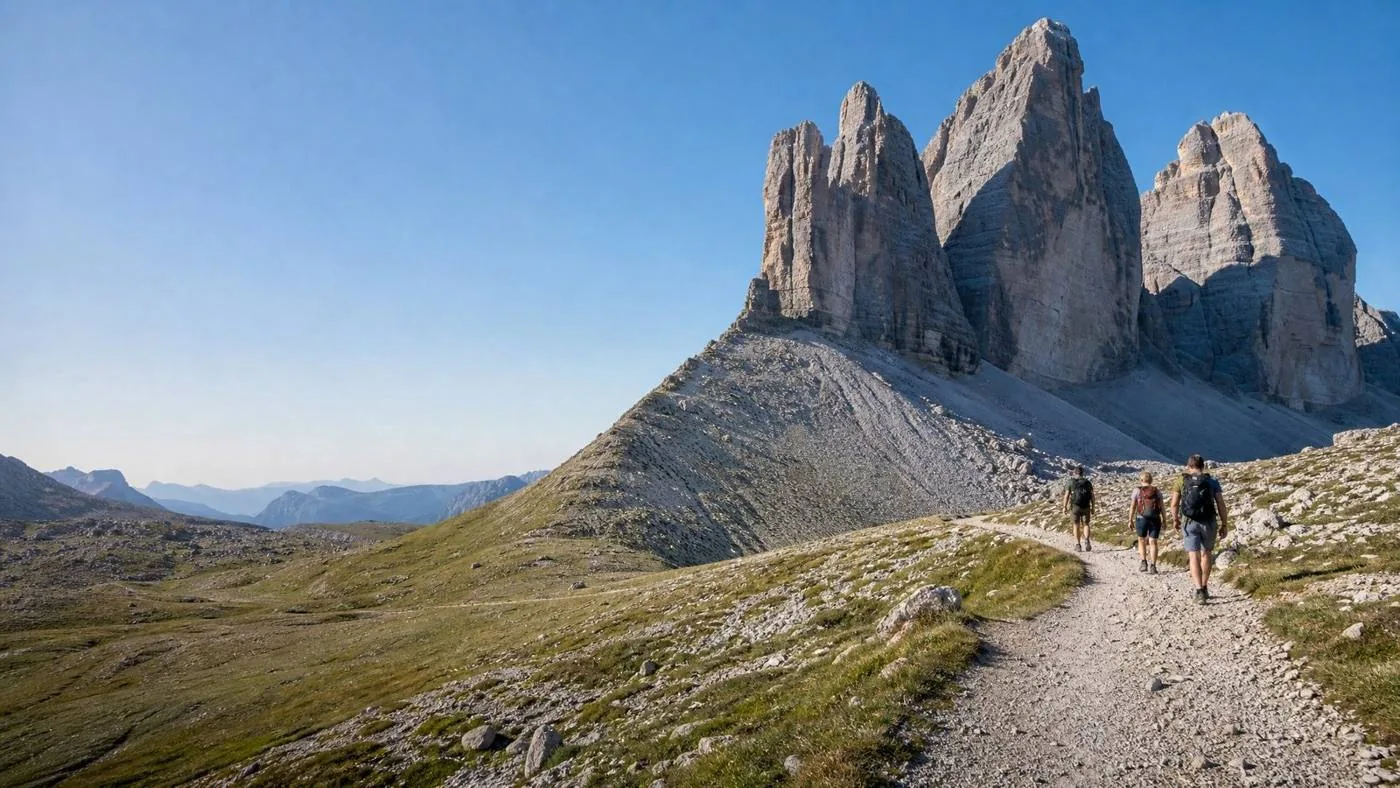
Guided hike or day trip?The famous trails are marked and walked by thousands of people without a guide. What GetYourGuide sells is either a local guide on one of those trails — the Tre Cime loop, Lake Sorapis, the Cinque Torri, the Alpe di Siusi — or a van or coach day from Venice or Lake Garda that shows you lakes and passes with short walks between.
Compare the optionsWhy the classic trails are safe
The paths are run by the alpine clubs (CAI, SAT in Trentino, AVS in South Tyrol). They are marked with red-white-red paint and numbered signposts, and on the famous routes you are rarely out of sight of other walkers. Rifugi sit along the busy trails, with food, water and a roof. Mountain rescue covers the whole range: the CNSAS with its provincial branches, Bergrettung in South Tyrol, and the Aiut Alpin Dolomites helicopter in Val Gardena and Val Badia. I have walked these paths every summer of my life, and on an ordinary day the hardest decision is where to eat lunch.
What can go wrong, and how to handle it
- Afternoon thunderstorms. Common on July and August afternoons. Start at 07:00–08:00 and be off ridges, summits and cabled sections by early afternoon. If a storm comes, shelter in a hut, not under an isolated tree or near metal cables.
- Snow in June. Old snow can linger on north-facing slopes and gullies into late June. Ask the hut about conditions; the best months are on when to go.
- Exposed sections. A few routes have them: the cabled ledge on the way to Lago di Sorapis, the ledge at the Cadini di Misurina viewpoint, anything graded EE. Check the grade before you start; they are explained on how hard the hiking is.
- Sun at altitude. UV is high between 2,000 and 3,000 m and there is little shade above the trees. Sunglasses, a hat and sunscreen.
- Getting caught out late. Days in autumn are short and huts close at the end of the season. Know your way back and when the last lift or bus leaves.
- Wet limestone. Scree and limestone get slippery in rain. Wear boots or sturdy trail shoes with a grippy sole; see what to wear.
Stay on marked trails. Many meadows are private hay fields, and paths close for rockfall from time to time. Closed-trail signs are legally binding, and a rescue from a closed path can bring a large bill.
Check the forecast the evening before
ARPAV Dolomiti Meteo covers the Veneto side, Cortina included. It is issued daily at 13:00 for 48 hours, updated at 16:00 and 09:00, and gives temperatures at 1,500, 2,000 and 3,000 m. For Val Gardena, Alta Badia and Pusteria use the South Tyrol weather service; for Val di Fassa and the Brenta, Meteotrentino. I read the forecast the evening before and again at breakfast.
Emergency numbers and rescue
Call 112 anywhere. It is fully active in Trentino and South Tyrol. In the Veneto Dolomites (Cortina, the Tre Cime, Sorapis, the Cinque Torri) 112 works but goes first to the Carabinieri under a transitional model that runs until 2028, so 118 reaches medical and mountain rescue directly there.
In most of Italy the health service pays for mountain rescue, but Veneto and Trentino-Alto Adige may charge the people rescued, especially if they are not injured (lost, stranded or exhausted), when helicopter time can be billed. A helicopter call-out for an unhurt hiker can be very expensive. Alpine-club membership (CAI, Alpenverein) and dedicated rescue insurance cover this; check that your policy says “search and rescue including helicopter” in Italy. Background on this guide to Dolomites mountain rescue.
Bears, wolves and other animals
Bears. Trentino’s brown bears live almost entirely in western Trentino, in the Adamello-Brenta area. The population was reported at 86–120 around 2023, descended from 10 bears released in 1999–2002. Visit Trentino’s bear FAQ calls encounters “extremely rare” and does not list the classic hiking areas (Val di Fassa, San Martino, Cortina, Val Gardena) as bear habitat. In South Tyrol bears are seen only occasionally, mostly near the Trentino border and sometimes in Pusteria. If you ever do see one: make noise, never approach cubs, back away slowly without running, and report it to 112.
Wolves live across South Tyrol (98 wolves in 9 packs and 8 pairs in the 2025 regional data). They are a problem for farmers’ livestock; attacks on hikers are not a realistic concern. Keep dogs on a lead. Adders and asp vipers live on sunny rocky slopes and bites are rare, so watch where you put your hands. Ticks are mostly in lower meadows and woods; check your skin after a hike. Cows graze the high pastures: give cows with calves a wide berth and close the gates behind you.
Will I get altitude sickness?
Very unlikely on a day hike. Most popular hikes sit between 2,000 and 2,800 m. According to the CDC’s high-altitude advice, altitude illness can occur above about 2,450 m, but the risk depends mainly on how high you sleep and how fast you climb. Day hikers who sleep in the valley rarely have problems, though some feel breathless or get a mild headache above about 2,500 m. Mild symptoms are headache, tiredness, loss of appetite and nausea; if they come, go down.
The riskiest trek?
The classic Dolomites routes are marked walking paths, not risky treks. The serious terrain is the via ferratas and the rock climbs, which are a different activity with a harness, a helmet and usually a certified mountain guide.
A guide for peace of mind
A guide handles the pace, the route and the weather call, which is most of what keeps a mountain day easy. On the guided Tre Cime loop, Claire noted that her guide “matches the pace of the group”. The four guided hikes are compared on guided hikes.
Frequently asked questions
Are the Dolomites safe to hike?
Yes. The classic trails are marked, maintained and busy all summer, with rifugi along them and mountain rescue across the range. Start early to beat afternoon storms and check the forecast the evening before.
Is hiking in the Dolomites safe for beginners?
On the grade E and easier paths, yes. The Tre Cime loop, the lake circuits and the lift-assisted walks suit beginners. Avoid EE routes and via ferratas until you have experience or a guide.
What predators are in the Dolomites?
Brown bears live almost entirely in western Trentino and encounters are extremely rare. Wolves live across South Tyrol but are a problem for livestock, not hikers. Adders are the only other animal worth watching for.
Are there bears in the Dolomites?
Not in the classic hiking areas. Trentino’s bears live in the Adamello-Brenta area in the west; Cortina, Val Gardena and Val di Fassa are not bear habitat. The Banff comparison is on Dolomites or the Alps.
Will I get altitude sickness in the Dolomites?
Very unlikely if you sleep in the valley. Most hikes are at 2,000–2,800 m; some people feel breathless or get a mild headache above about 2,500 m. The risk grows with sleeping altitude and fast ascent.
What is the riskiest trek in the Dolomites?
None of the classic hikes; they are marked walking paths. The demanding terrain is via ferrata and rock climbing, which is a separate sport with its own kit.
What number do I call in an emergency?
112 works everywhere. In the Veneto Dolomites, around Cortina and the Tre Cime, 118 connects you directly to medical and mountain rescue.