Hiking in the Dolomites, explained
I was born in Cortina d’Ampezzo and I have walked the Tre Cime loop, the path to Lago di Sorapis, the Cinque Torri and long sections of the Alta Via 1 every summer, and been turned back by afternoon storms more than once. I am not a mountain guide, and I have never worked for an operator, a rifugio or a tourism board.
Guided hike or day trip?The famous trails are marked and walked by thousands of people without a guide. What GetYourGuide sells is either a local guide on one of those trails — the Tre Cime loop, Lake Sorapis, the Cinque Torri, the Alpe di Siusi — or a van or coach day from Venice or Lake Garda that shows you lakes and passes with short walks between.
Compare the optionsWhat and where the Dolomites are
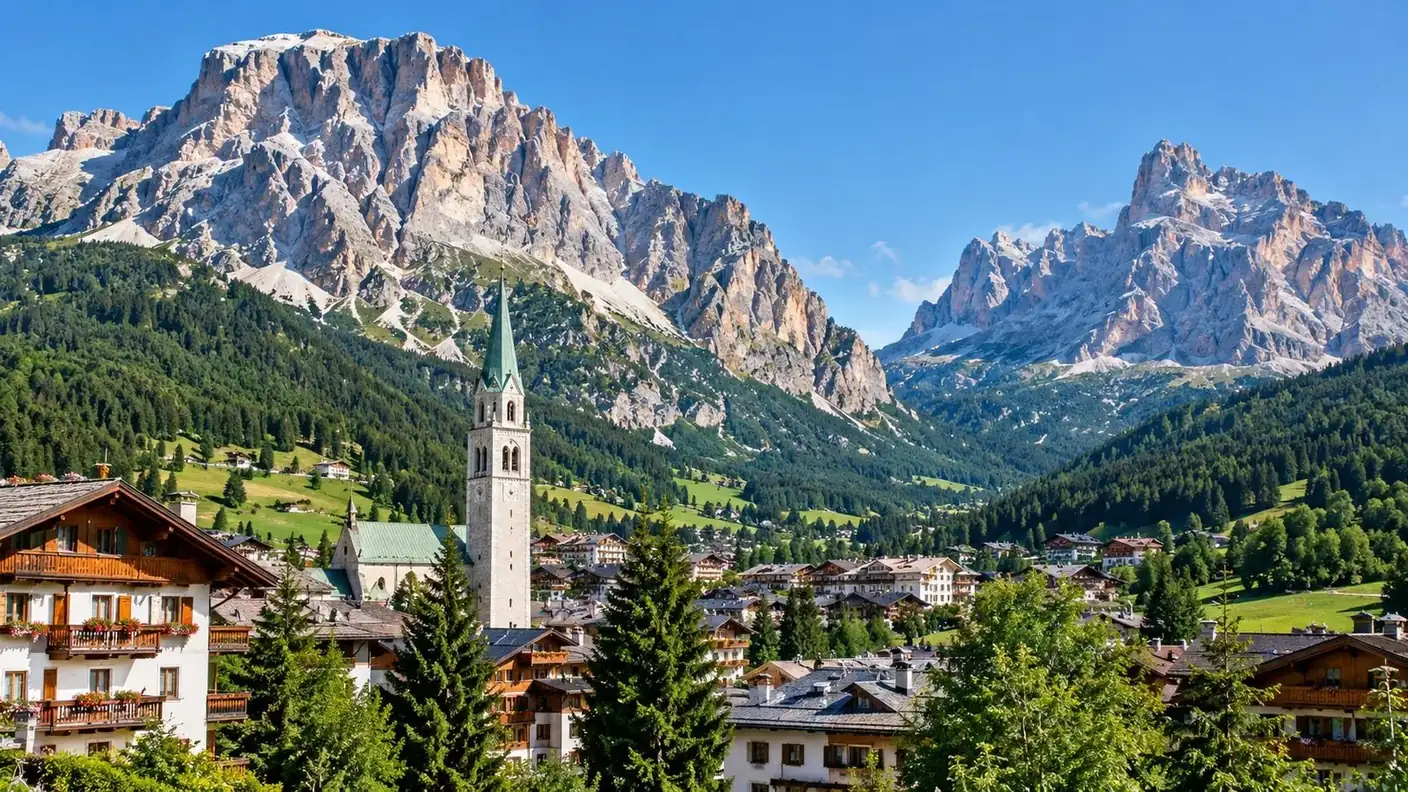
The Dolomites are a UNESCO World Heritage Site, inscribed on 26 June 2009 and split into nine separate systems. They spread across five provinces: Belluno in the Veneto, Bolzano (South Tyrol), Trento, and Pordenone and Udine in Friuli. All of it is in Italy. The highest peak is the Marmolada, 3,343 m. For hiking, the range sorts itself into bases: Cortina for the Tre Cime, Sorapis and the Cinque Torri; Val Gardena for Seceda and the Alpe di Siusi; Val di Fassa for the Sella and the Marmolada; Alta Badia for the Puez; Alta Pusteria for Braies and the Tre Cime from the north.
The famous hikes are marked day walks
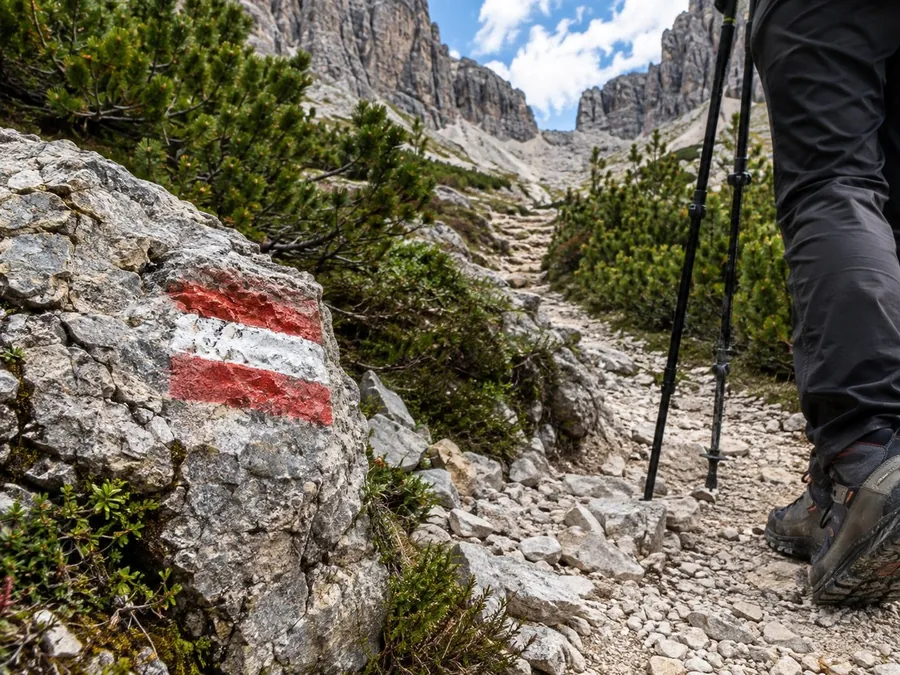
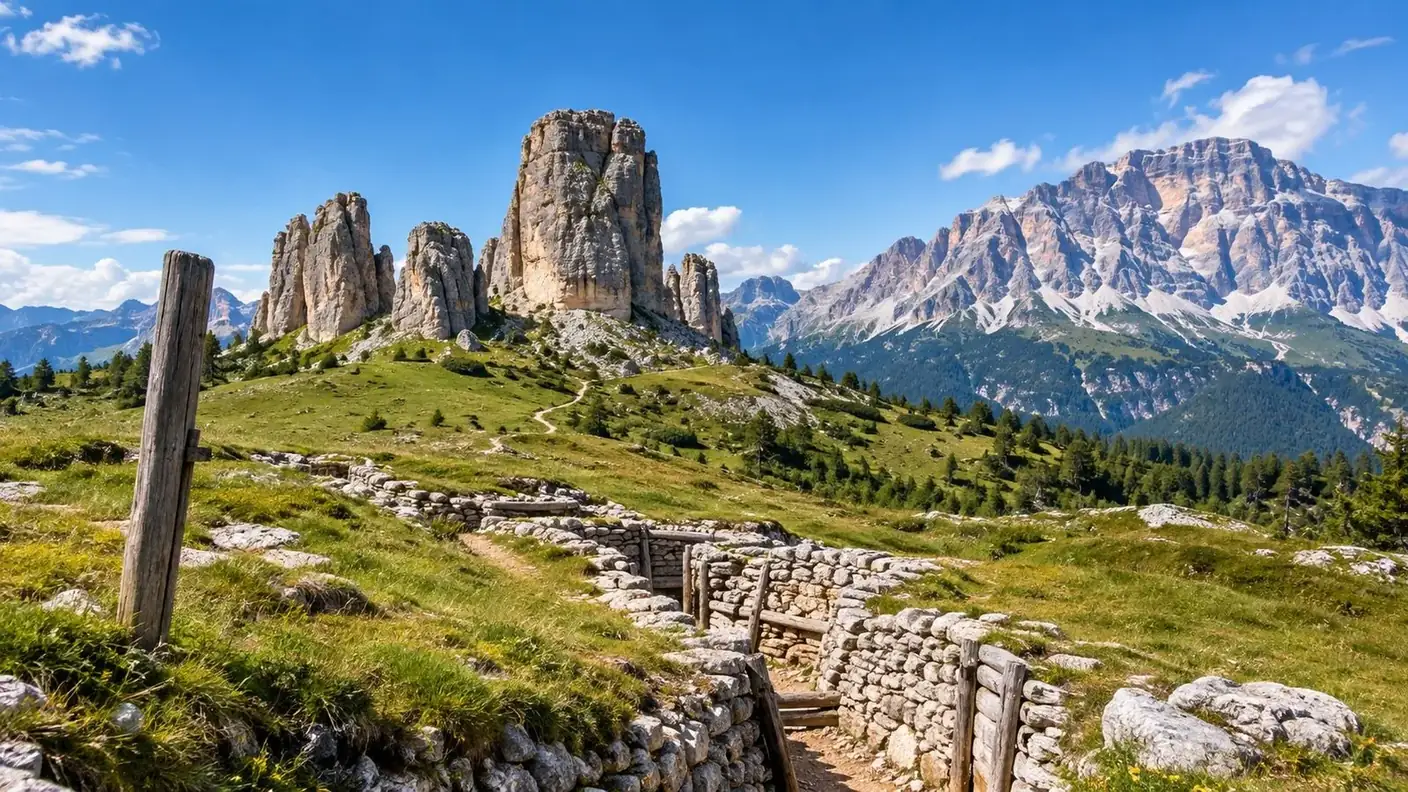
The hikes on every list are day walks that start from a car park, a lift or a rifugio, on paths with red-white-red paint marks and numbered CAI signposts. Most are graded E: varied ground, some steep bits, some fitness needed, no climbing. Seceda is a short walk from the top of a cable car, the Braies circuit is about 3.5 km and mostly flat, and the Cinque Torri loop from the chairlift takes 1–1.5 hours past restored First World War trenches. The benchmark is the Tre Cime loop: about 10 km from Rifugio Auronzo, 300–400 m of climbing depending on the source, 3–4 hours for a fit hiker or 5–6 with hut stops. The one real climb is to Forcella Lavaredo, 2,454 m, and the north faces from there at 08:00 are my favourite view in the range. By 10:30 in August the path up to it is a queue. The loop in detail.
Season and afternoon storms
Most rifugi open between mid and late June and close in mid to late September; the lifts run on similar dates, a few into October. Snow can sit on north-facing paths and gullies into late June. In July and August the pattern repeats most days: clear morning, cloud building after noon, storms from about 14:00 to 17:00. Start at 07:00–08:00 and be off ridges and cables by early afternoon. If thunder comes, shelter in a hut, not under a lone tree. Month by month.
Reaching the trailhead is the hard part
This is where plans go wrong, because the busiest places now run on bookings. The 6 km toll road from Misurina to Rifugio Auronzo has needed an online booking since 2025, with your number plate entered by 23:59 the day before, on auronzo.info. Without a car, Dolomiti Bus line 31 runs from Misurina to Auronzo (daily from 30 May in 2026, with no online booking needed), and line 444 comes up from Dobbiaco station, booked online for the whole 2026 season. At Lago di Braies, from 1 July to 15 September 2026 the valley was open between 09:00 and 16:00 only to people with a parking booking or permit, to buses, walkers and cyclists; check prags.bz before a summer visit. The Seceda cable car moved to pre-booked 30-minute slots in summer 2026 on seceda.it, and since 2025 landowners have charged walkers on the path over their meadows to the famous ridge viewpoint. These rules change every year. Buses, trains and roads.
Rifugi: lunch, a bed, and cash
A rifugio is a staffed mountain hut with a proper kitchen. Most are open June to September; lunch on a hut terrace is half the point of a Dolomites day. For a night, half board (dinner, bed, breakfast) is the norm and usually costs less than a valley hotel. Bring a sleeping-bag liner. Each hut takes its own bookings; for the popular Alta Via 1 huts in July and August, book 3–5 months ahead. More huts take cards now, but some are cash-only and terminals fail when the connection drops, so I carry enough cash for the whole trip. Hut to hut, and a realistic 5-day section.
Guided hike or Venice day trip
GetYourGuide sells two very different things. The day trips from Venice and Lake Garda are 9–10 hour days with about 2–2.5 hours of driving each way; you see lakes, passes and Cortina, and the longest walk is a lake circuit. They suit someone based in Venice with one day and no car. The guided hikes put you on a real trail with a local guide who sets the pace, makes the weather call and explains the geology and the war remains. On the Tre Cime a guide is optional, since the loop is marked and walked unguided every day; the guided version’s real convenience is that the toll road is included. At Sorapis the loop back has “a few slightly exposed sections”, and there a guide, or returning the way you came, matters more. The four guided hikes compared.
What I would tell a friend
Pick a base and sleep in the mountains rather than driving from Venice each day: three nights in Cortina covers the Tre Cime, Sorapis and the Cinque Torri. Check the forecast the evening before; ARPAV’s Dolomiti Meteo comes out at 13:00 and is updated at 16:00. Start early. Pack layers, because the air cools about 6 °C for every 1,000 m you climb, plus a rain shell, sunglasses and 1–2 litres of water. Carry cash for the huts, and book the toll road or the bus before you go to bed. Plans for 1, 3, 5 and 7 days.
Ready to book?
If you want someone else to handle the toll road, the pace and the weather call on the Tre Cime loop, the guided hike below is the one I would look at first. If you are staying in Venice, compare the day trips instead, or see every hike and tour side by side. The live price and dates are in the booking box.
Frequently asked questions
Can a beginner hike in the Dolomites?
Yes. The Tre Cime loop and the Alpe di Siusi paths are wide, marked and walked by families every summer; start early and turn back if storms build. How hard the hiking is.
When is the hiking season in the Dolomites?
Roughly mid-June to late September, while the rifugi and most lifts are open. July and August are busiest and stormiest in the afternoons. The best month to go.
Do you need a guide for the famous hikes?
No, the classic day hikes are marked paths. A guide adds transport, pace, weather calls and the history of the place. Guided hikes compared.